Coyotes
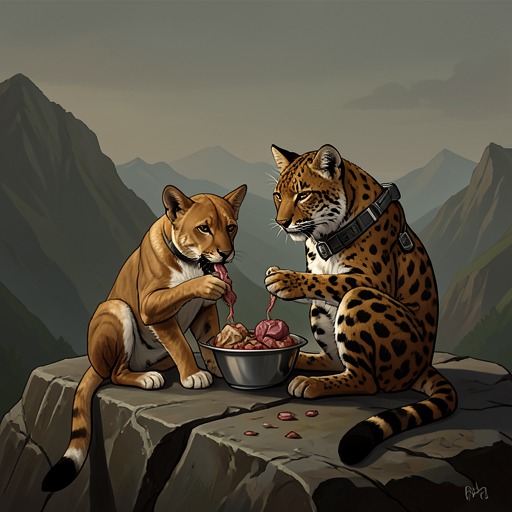
A Dog's Way HomeCoyotes are the recurring wild predators in Bella’s journey, detected first by scent and then encountered as organized, persistent threats. Their presence changes how Bella and Big Kitten travel: Bella steers them away from coyote traces, draws on an earlier confrontation when she is hunted alone, and is ultimately rescued when Big Kitten returns to drive off her pursuers.
Recognition and First Pursuit
Bella recognizes coyotes as animals she had seen while hiking with Lucas, but their scent distinguishes them from the dogs she longs to meet. When she detects dogs without people nearby, the fur on her neck rises; she senses something feral in their smell and reads it as evidence that they have not been bathed or recently fed dog food. She also realizes that the animals are tracking her and Big Kitten, and that they are getting closer. The distinction is important to Bella: domestic dogs belong with people, while these wild canines present a danger to the traveling pair.
The first pack emerges in an open, rocky area with only a few small trees. Bella identifies four coyotes: a female and three young males. They are not approaching out of curiosity but hunting. Big Kitten, by then nearly as large as Bella, recognizes the threat too, baring her teeth as the coyotes move across the open ground. The pair cannot simply flee. A steep rock wall blocks the way behind them, and the sparse trees offer little cover. Bella growls and faces the pack as it spreads out and advances cautiously. She understands the imbalance of numbers: even two larger animals may be overmatched by four attackers.
The encounter also reveals how the danger works on Bella. She experiences a powerful, unfamiliar fury and imagines battles with coyotes that she has never actually fought. At the same time, she senses Big Kitten’s terror and sees that the younger animal is preparing to run. Bella judges that flight along the rock wall would leave Big Kitten exposed to pursuit and interception. The coyotes’ patient approach, the blocked escape route, and Bella’s awareness of Big Kitten’s fear make this more than a sudden meeting; it is a confrontation in which both animals’ options are sharply limited.
A Persistent Wilderness Threat
Coyotes remain part of the landscape even when Bella and Big Kitten avoid direct encounters. Bella veers away when she smells foxes, although she and Big Kitten never again find a fox with a rabbit to steal. Coyote scent prompts a stronger response: she leads Big Kitten well away from it. As they travel, Bella’s choices are shaped by the need to protect her companion as well as to continue toward Lucas. She knows she could cover more ground without worrying about Big Kitten’s safety, but she cannot bring herself to leave the cub unprotected.
Their partnership unfolds under other pressures, including hunger, human activity, and the changing seasons. Big Kitten often hunts, and the two share what she brings back; after snow transforms the landscape, she becomes able to find larger prey, including an elk. These changes do not remove the danger from coyotes. Rather, they give context to the animals’ vulnerability: the pair must find food and shelter while also avoiding predators. Bella’s knowledge of coyote scent becomes a practical guide, helping her redirect their route before the animals come into view.
The Coyote at the River
Later, while Bella is staying with Axel beside a river, a lone coyote watches from the opposite bank. Bella detects the familiar scent and quietly growls, but recognizes that the animal will not cross the flowing water. Axel does not respond to the coyote’s presence or to Bella’s warning. The encounter ends without an attack: the coyote eventually slips away, and the river remains a barrier between it and the dog.
This brief sighting contrasts with the pack encounters. Bella is now tied to Axel’s camp and cannot simply choose a new course, yet she still notices the predator before the person beside her does. Her awareness is immediate and bodily: the scent prompts a low growl, while her judgment of the river’s obstacle keeps the danger in proportion. The coyote’s retreat also shows that proximity does not always become pursuit; in this instance, distance and the water prevent the encounter from escalating.
Pursuit and the Return of Big Kitten
After Axel’s death, Bella resumes her journey alone. The coyote odor is now consistently present in the area, and she retreats whenever she realizes she is moving toward the animals. On the day she finds discarded hot-dog pieces in a metal bin, she smells at least three nearby and immediately changes direction. Advancing toward Lucas matters to her, but avoiding the predators takes priority. When their scent fades and then returns, she understands that she is being hunted rather than merely traveling through a place where coyotes roam.
Bella reaches a broad meadow that leaves her exposed. She reasons from her previous experience: retreating into the trees would put her back in danger, while an outcropping of boulders uphill might keep the attackers from surrounding her. Despite hunger and weakness, she runs for the rocks. From a shaded spot at their base, she sees three coyotes emerge from the woods and approach in single file. They spread apart as they climb, with Bella’s back to the boulders. She reads them as three young males from the same litter, all starving. Though each is smaller than she is, their desperation and coordinated approach make them dangerous.
Bella resists the urge to charge, barks, and snaps her teeth to make the coyotes hesitate. When one advances, the others move to the side, and the confrontation becomes a fight. Before the pack can overwhelm her, a much larger cat bursts into the encounter and drives the coyotes downhill. Bella recognizes Big Kitten despite how dramatically her companion has grown. The reunion changes the meaning of the coyote pursuit: the animal Bella once tried to protect now arrives as her defender.
Narrative Role
Coyotes recur as a test of Bella’s ability to read danger without human explanation. She relies on scent, terrain, numbers, and the behavior of the animals around her; her decisions often precede any visible attack. The first pack teaches her that flight can be dangerous when escape routes are blocked, and that lesson later informs her choice to seek the boulders rather than run blindly across the meadow. Her response is not simply fear or aggression, but an effort to judge when to avoid, when to stand her ground, and where survival may be possible.
The coyotes also mark the difference between companionship and predation in Bella’s account of animal life. Dogs with people belong to a social world she wishes to rejoin; coyotes travel and hunt without human caretakers, and their presence forces her to protect herself and Big Kitten. Yet the story does not present every encounter as identical. A river keeps one coyote at a distance, while a pursuing pack presses Bella into a direct confrontation. Across these variations, coyotes remain a recurring measure of vulnerability in the wilderness—and the final scene reverses the earlier balance when Big Kitten, once the frightened cub beside Bella, saves her from the pack.